Trees, Fields and Streams: How Trees Can Protect Rivers and Streams from Agricultural Pollution
December 10, 2025An Israeli study conducted in the Kishon Stream Basin examines how planting strips of vegetation along the banks can shield the stream from pollution originating in adjacent agricultural fields
For years, streams in Israel’s agricultural regions have served not only as channels for flowing water, but also as conduits carrying pollutants into natural ecosystems. The combination of intensive agriculture, fields left exposed to rain, and outdated drainage infrastructure has led to widespread damage to water quality, to ecological systems, and to the ability of streams to fulfill their role within the broader landscape. A study conducted over the past three years by the Soil Erosion Research Station at Israel’s Ministry of Agriculture and Food Security, in collaboration with and funded by the KKL-JNF, and which was presented at the 2025 KKL Research Conference, offers a different approach to addressing the problem. The approach relies not on concrete walls, earth embankments or treatment facilities, but on trees, shrubs and natural vegetation.
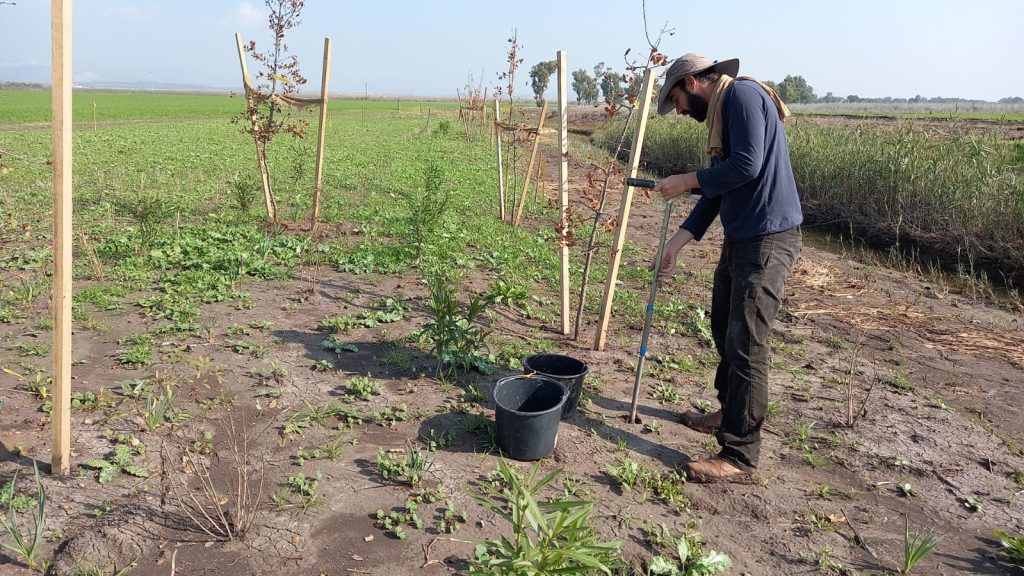
The research was carried out in the Kishon Stream catchment, one of Israel’s largest and most significant drainage basins. The area is characterized by intensive agricultural activity, and over the years the stream and its tributaries have suffered from extensive pollution, poor water quality, soil erosion and blockages in drainage infrastructure. Field tests conducted by the researchers detected traces of pesticides, fertilizers and pharmaceuticals at nearly every sampling point – direct evidence of contaminants being washed from agricultural fields into the streams, primarily via rainwater.
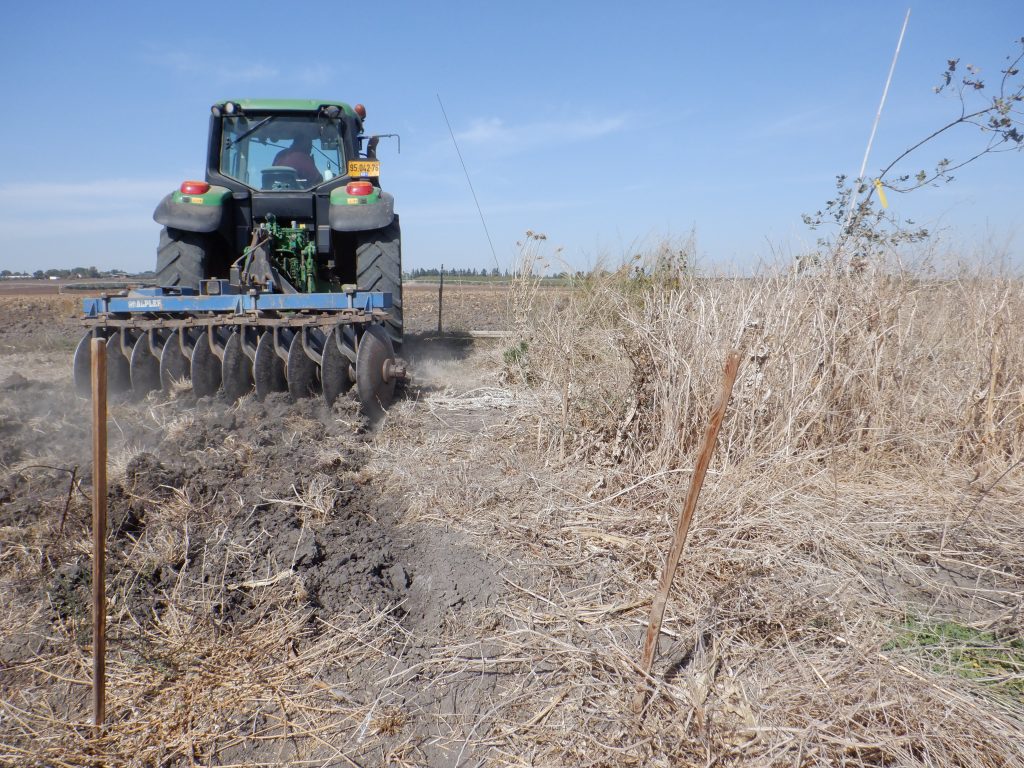
One of the main reasons for this is land-use practices. In many places, agricultural cultivation extends right up to the riverbanks, with no buffer strips capable of delaying pollutants, filtering them, and creating a natural zone that protects the stream. The result is unobstructed flow of contaminants into water sources, accelerated soil erosion, and increased pressure on drainage systems. According to the study, tens of millions of shekels have been invested in recent years in removing sediment from drainage basins in the Kishon watershed and improving their capacity to carry stormwater downstream without flooding adjacent lands.
A Nature-Based Solution: Vegetated Buffer Strips
The solution the researchers set out to examine is well known worldwide but has rarely been implemented scientifically in Israel: vegetated buffer strips. These are relatively narrow strips of trees, shrubs and local vegetation planted between fields and riverbanks. Globally, such strips serve as natural tools for preventing soil erosion, filtering pollutants, retaining soil moisture and restoring habitats.
“The goal of the study was to investigate restoring a highly degraded riparian zone, as an example of a nature-based solution to reduce flood risk, capture eroded sediments, improve water quality and increase habitat biodiversity. Specifically, we examined the role of trees in restoring ecosystem services using buffer strips in intensive agricultural areas, where no native vegetation remained at the farm-stream interface”, explains the principal investigator, Dr. Orah Rein, from the Soil Erosion Research Station at Israel’s Ministry of Agriculture and Food Security. “We sought to quantify and evaluate the effectiveness of planting native, perennial buffer strips, including oak trees, in providing a variety of ecosystem services to the field and stream, and at the same time evaluate the effects of geomorphological restoration on morphologic habitats and stream processes (processes that participate in shaping the landscape, M.P.), which influence the process of restoring ecosystem services between the field and stream, over time and space”.
To support the research, an experimental site was established along the Keyni Stream, one of the Kishon tributaries, where planned vegetated buffer strips were planted as part of a multi-year watershed restoration project.
Over the course of the three-year study, the researchers examined how the vegetation affected hydrological and ecological processes in the area. They monitored levels of pollutants in the water, the extent of soil erosion, and changes in soil moisture. They also conducted bio-acoustic monitoring -recording animal sounds – to detect shifts in biodiversity. In parallel, they developed a spatial computer model enabling analysis of the watershed’s surface runoff pathways in order to identify locations where buffer strips would be especially effective.
A Natural Filter for Pollutants
The results are highly encouraging: the findings indicate a clear and positive impact of vegetation on the environment adjacent to the stream. The more diverse the vegetation, the lower the concentration of fertilizers and other pollutants found in the water. The researchers found that as plant species richness increased within the buffer strip, levels of ammonium nitrogen in surface runoff – one of the key indicators of agricultural pollution – were lower. In other words, the buffer strip functions as a natural filter that prevents pollutants from entering the stream corridor and helps protect water quality.
Moreover, the vegetation contributed to soil stability and reduced erosion over the years. In the experimental areas where trees and shrubs were planted, a significant decrease in soil loss was measured, while open agricultural fields experienced nearly double the erosion. The effect was particularly pronounced along main flow paths, where the risk of soil degradation is higher. In addition, the researchers observed a clear impact on soil moisture conditions, which were more stable within the buffer strips – helping maintain soil fertility and biological activity even during dry seasons.
Another aspect examined was the impact on biodiversity. Through continuous acoustic monitoring, the researchers documented activity from tens of thousands of individuals across various animal species throughout the year. In strips where mature trees were planted, sustained and more abundant activity was recorded compared with open agricultural areas, including species of birds such as francolins (a subfamily of partridges) and amphibians such as tree frogs. This finding illustrates how a relatively simple land-management change can improve a site’s capacity to support wildlife and serve as a thriving, diverse habitat.
Maximizing Effectiveness
A central component of the study was the development of a spatial decision-support tool. Using it, the researchers identified key points where planting a buffer strip would provide the greatest benefits in pollutant filtering and soil conservation. “In the study, we looked at the surface runoff catchment path and showed that if you actively promote planting trees along this path, then the flow reduction and water filtration effectiveness is even higher,” says Liron Israely, a doctoral student at the School of Zoology at Tel Aviv University, who was a co-author of the study. “Although it is not possible to plant trees around the entire stream and catchment basin, it is possible to focus on areas that are more vulnerable. Therefore, we developed a methodology targeting flow concentration paths, which enables strategic optimization of the need for mitigation. Such an approach allows us to create a plan that is economically efficient,” he says. The analysis highlighted that in areas with particularly high hydrological sensitivity or soil with low water permeability, buffer strips provide significant added value.
The study, conducted in collaboration with agricultural partners and the Kishon Drainage Authority, lays new scientific and practical foundations for rehabilitating stream buffer zones in Israel. It demonstrates that even in regions of intensive agriculture, nature-based solutions can be integrated without costly infrastructure or complex engineering. Well-designed buffer strips may reduce water pollution, preserve soil, support biodiversity and establish a model for sustainable watershed management.
“The research helps develop a multi-dimensional understanding of the considerations needed in creating buffer zones, and the unique contribution of trees and shrubs to the functioning of restored buffer strips,” concludes Dr. Orit Skutelsky, an ecologist in the KKL-JNF Chief Scientist’s Office. “It highlights the links between spatial functional characteristics of the buffer strip and the ecological quality of the stream segment, and supports the development of a systemic, spatial approach to planning buffer strips for ecological stream restoration.”

The Drone That Knows When the Forest is Thirsty
A new method makes it possible to detect water stress in trees without touching the leaves
Etrogs in danger: Will Israel be able to grow citron in the future?
Global warming and extreme weather could spell the end of cultivating citrus trees and the entire industry here, Israeli experts say